
"Stealing" Other Writers' Words
Copying out some of my favorite passages by hand

My childhood dream – or one of them, anyway, as I had a lot of dreams as a kid – was to be a comic book artist. I read some Marvel comics, but I really loved manga. I had an early subscription to Shonen Jump, which meant I was reading series like One Piece, Dragon Ball, Sand Land, and Rave Master as they were serialized. (Often, the magazine would run some chapters, and then you’d have to continue by buying the books.) I didn’t have a feel for how to write a good manga, but I would dream about creating one, so I spent a lot of time drawing.
I started by simply drawing what I imagined, and I was often disappointed by the results. I had a very clear image in my mind, but I couldn’t realize it on the page. Eventually, I convinced my parents to buy me some of Hikaru Hayashi’s How to Draw Manga books, hoping that I could improve.
I was a bit disappointed to find out that I’d need to first draw blocky characters made of rectangles, cones, and triangles.
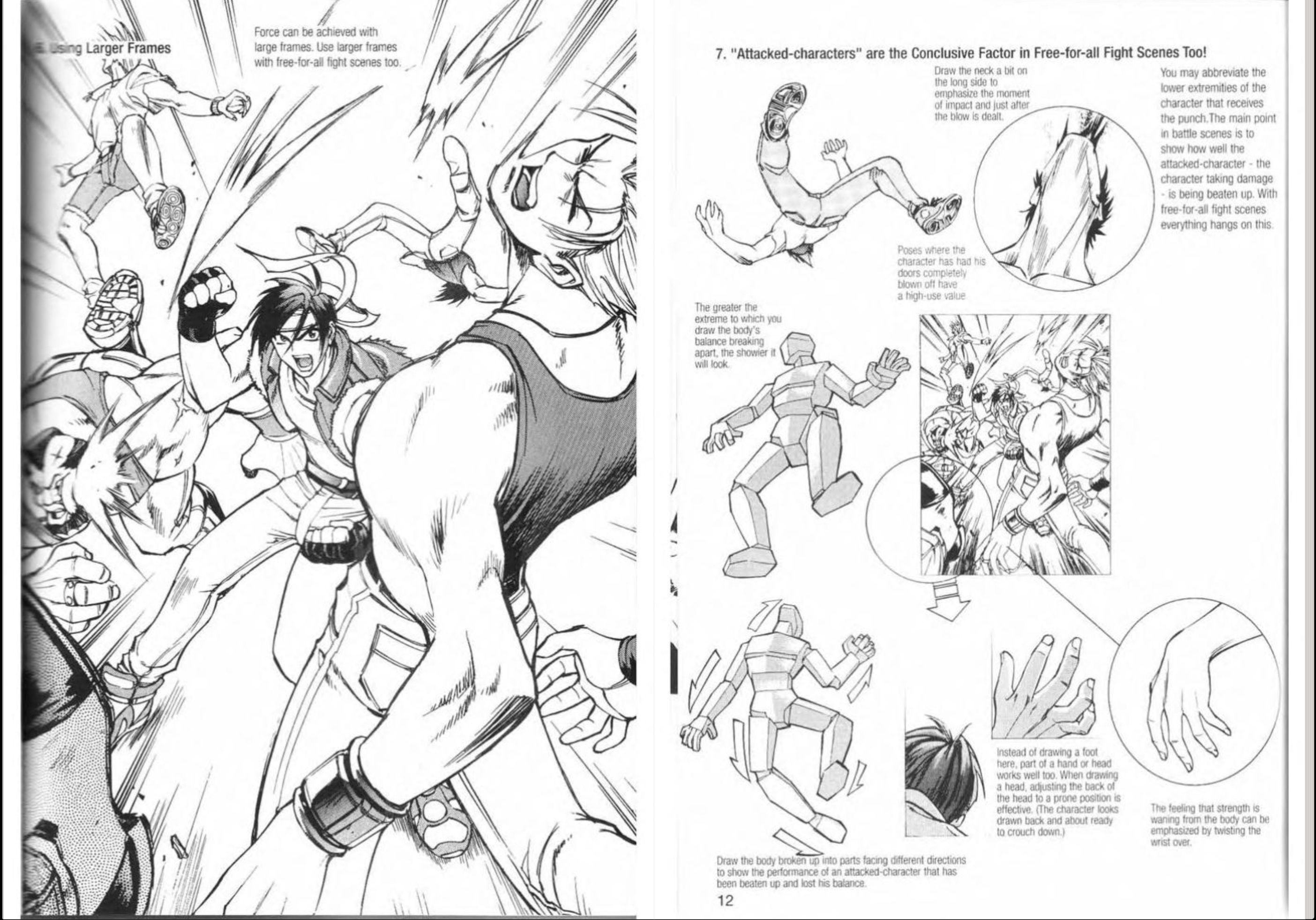
I was too young to know that this was how every book about learning to draw starts. Other books I later read, like How to Draw Comics the Marvel Way, do the same thing. You need to master the basics of form, and this is done by training you to decompose natural images into geometric shapes; you can add detail and complexity later.
So, I finally started doing it, building characters out of shapes and trying to make things look good later.
I did get better—I even think I was pretty good. But I abandoned drawing around age fourteen, just after my parents got divorced. (I don’t have a rationale for this, but my response to the divorce was to i) stop drawing, ii) start listening to punk music, and iii) start playing guitar.) Still, the experience of learning to draw better was an important one for me, and I’ve found that it has applicability to other parts of life.
I was reminded of this time in my life while I worked on a novel. (The novel is now written and in the hands of some readers, who will be providing me with editorial advice; after that, I’ll figure out what to do with the thing.1) As someone who has read a lot of novels, and someone who thinks they’ve developed a decent sense of what works and what doesn’t, writing this novel was an intensely frustrating experience. I knew what I was writing wasn’t good, but I didn’t know how to make it better.
Ira Glass once commented that young artists develop a sense of taste before they develop skill, which can be frustrating—you know what you’re making is bad, but you don’t know how to make it good:
All of us who do creative work, we get into it because we have good taste. But there is this gap. For the first couple years you make stuff, it’s just not that good. It’s trying to be good, it has potential, but it’s not. But your taste, the thing that got you into the game, is still killer. And your taste is why your work disappoints you. A lot of people never get past this phase, they quit. Most people I know who do interesting, creative work went through years of this. We know our work doesn’t have this special thing that we want it to have. We all go through this. And if you are just starting out or you are still in this phase, you gotta know its normal and the most important thing you can do is do a lot of work. Put yourself on a deadline so that every week you will finish one story. It is only by going through a volume of work that you will close that gap, and your work will be as good as your ambitions. And I took longer to figure out how to do this than anyone I’ve ever met. It’s gonna take awhile. It’s normal to take awhile. You’ve just gotta fight your way through.
All well and good, Mr. Glass, but the difficulty is figuring out how to fight your way through.
When it came to drawing, I needed to learn the basic mechanics of the craft. Then, I could work on developing my own style. But what about writing? I have a decent grasp of the English language – though readers of this newsletter know my propensity for typos – so I’d like to think I have the basics down. What do I do next?
Eventually, I thought: I should do what I did when I wanted to get better at drawing, after I worked on geometric forms. I should start copying the masters.
This idea is quite prevalent in other arts, especially painting. Degas once said:
[A painter] should copy the masters and re-copy them, and after he has given every evidence of being a good copyist, he might then reasonably be allowed to do a radish, perhaps, from Nature.
In his 1971 book Patrons and Artists of the Italian Renaissance, D.S. Chambers writes that ‘making and studying sketch copies of the others enabled artists to follow recent work and build up their own stock-in-trade-of-ideas.’ He then reproduces a contract for Michael Giambono to make a copy of another artist’s work—this was, apparently, considered normal.
In the fifteenth century, Cennino Cennini wrote The Craftsman’s Handbook.2 In it, he explicitly advises a would-be artist to copy the masters as part of their artistic training, writing to ‘take pains and pleasure in constantly copying the best things which you can find done by the hand ot great masters.’ But Cennini is very clear: you are copying to learn from them, and you should only copy works by a few masters. The point of the copying is to acquire the style of the master, and if the student copies too many masters, then the result would be that no style at all is acquired.
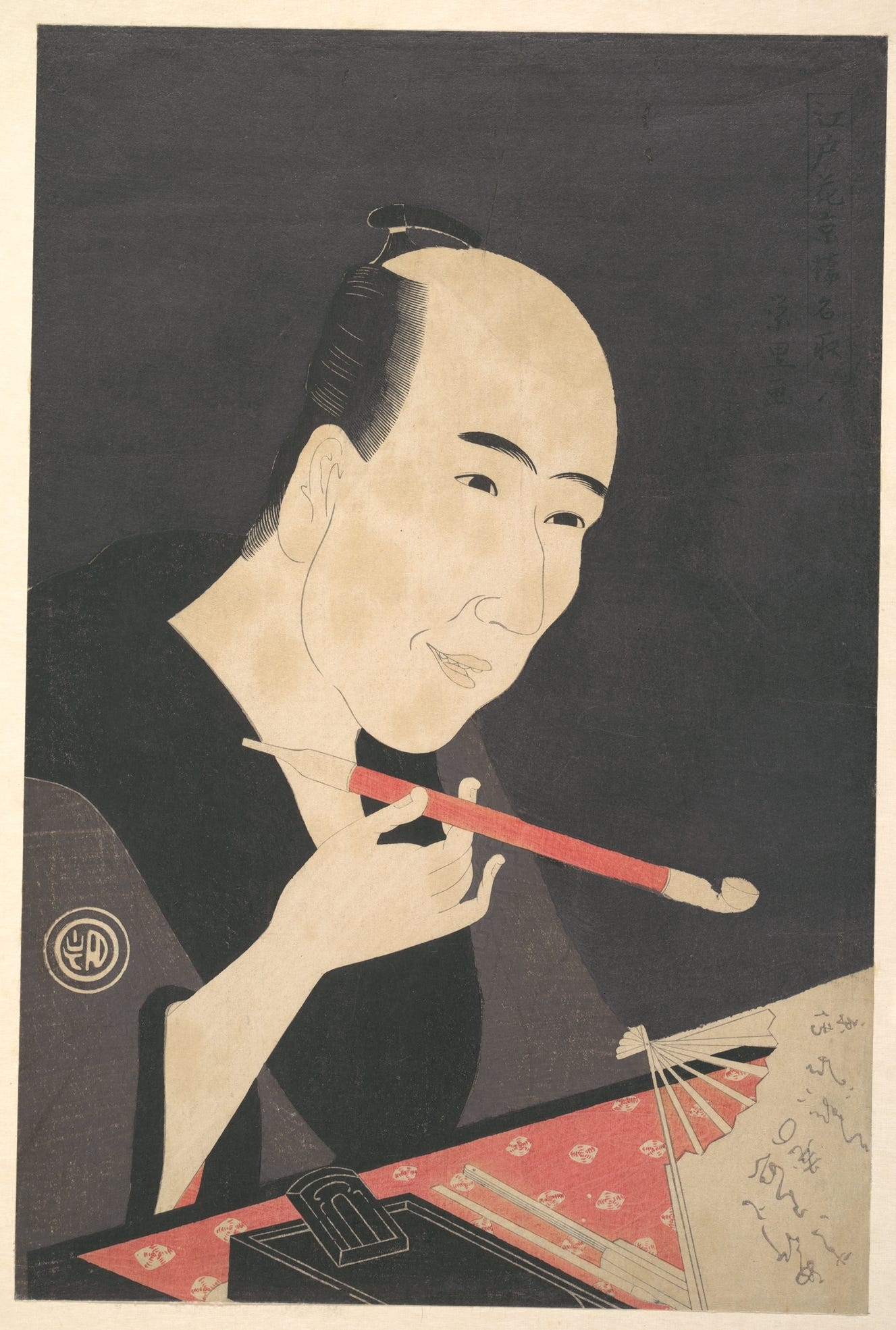
This idea of copying others seems to be common in the visual arts, but I never encountered it in my education as a writer. (To be fair, I never took a creative writing class. Does this happen?) Given that writers are extremely touchy about plagiarism, originality, and the like (this anxiety motivates many of the criticisms of AI, I think), I suspect that many would be averse to the practice of literally copying the masters they would like to emulate. Closely study, sure. But copying…that seems an awful lot like theft.
But it’s only theft if you present the other writer’s work as your own. If a student painter copied a master’s work and then tried to sell it as an original, that would be theft. The same would go for a writer: if you take a passage from another writer’s work and say you wrote it, and especially if you try to monetize it, then you’re doing something wrong. If you aren’t doing that, then I see nothing wrong with the practice of literally copying the writers you admire. And now that I’ve spent some time doing it, I’ve come to think of this as a valuable part of a writer’s education. This might be a way of fighting your way through that skill gap Glass described.
So, that’s what I’ve been doing lately.
To start, I decided that I would copy the first few pages of some of my favorite books. Wolf Hall by Hilary Mantel. The Spy Who Came in From the Cold by John Le Carré. Moby-Dick by Herman Melville. Books like that.
I assumed this would be easy, and I was wrong. Copying a page or two of a great novel requires a remarkable amount of concentration. My instinct was to simply look at the page and write, but I found that as I did this, I inevitably made mistakes. I could reliably copy about one sentence before I made some error. And I do not mean a simple grammatical mistake—often, I would write an entirely different word. Sometimes, I would radically alter the meaning of the passage by introducing some error. So, I would read a single sentence, storing it in short-term memory, and then write it very slowly, checking the wording whenever I was not completely confident. Soon, I found myself checking roughly every other word. This meant that copying a page could take me sometimes as long as half an hour.
I do not yet know if this is the right thing to do—perhaps the fact that no one else seems to do it is an indication that it is not the best way to work on my craft. At the very least, however, copying out these pages has taught me a good deal about some of my favorite writers.
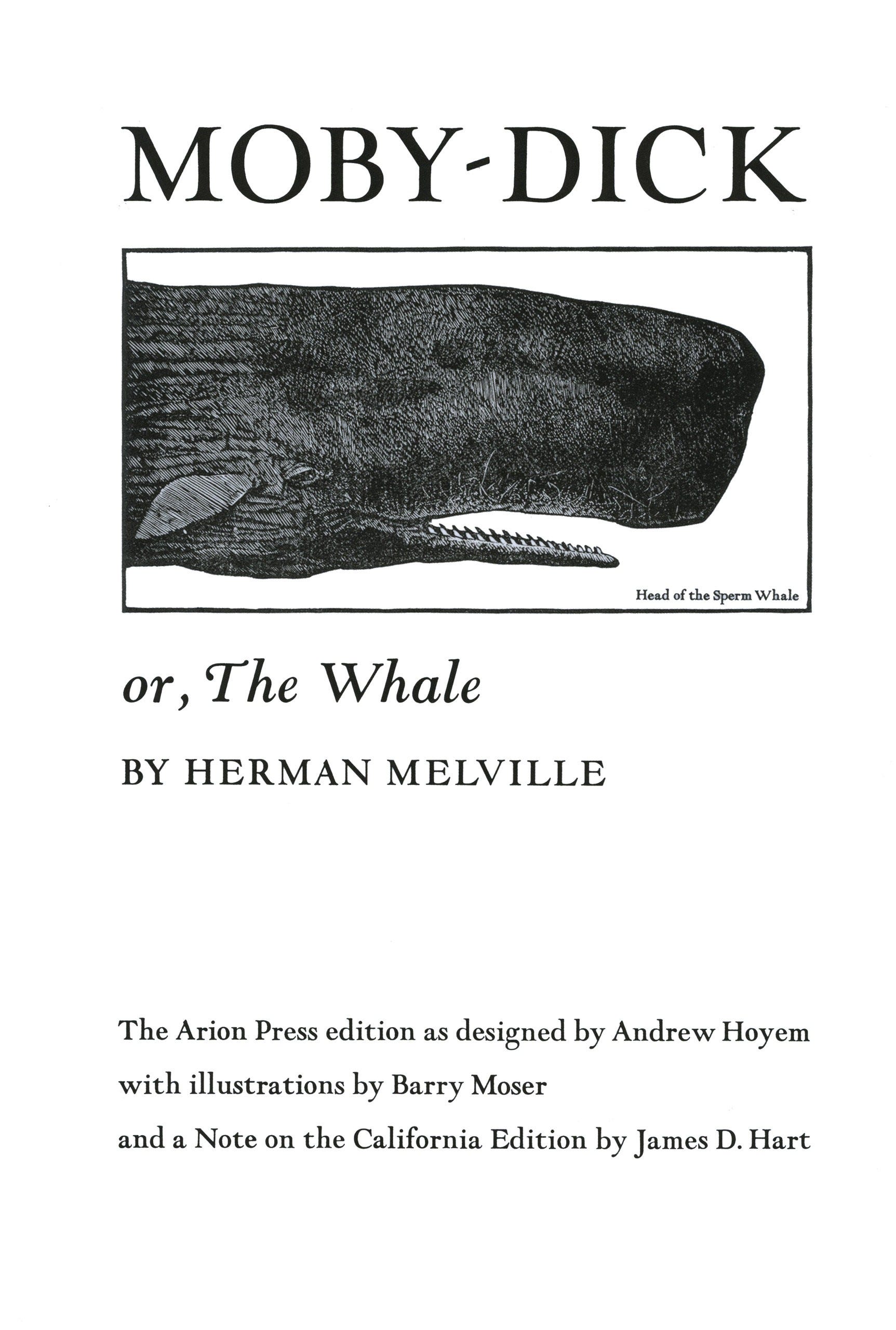
Melville overwhelms you. This is fitting, given the themes and subject matter of Moby-Dick. From the very first line, he is playing with: ‘Call me Ishmael.’3 Really? Why not, ‘My name is Ishmael’ or ‘I am Ishmael’? Given that Ishmael is a serial fabulist, is he trying to fool you from the start? You don’t have time to think about that, because that first line immediately leads to this tremendous paragraph, taking up the better part of the first page:
Call me Ishmael. Some years ago—never mind how long precisely—having little or no money in my purse, and nothing particular to interest me on shore, I thought I would sail about a little and see the watery part of the world. It is a way I have of driving off the spleen and regulating the circulation. Whenever I find myself growing grim about the mouth; whenever it is a damp, drizzly November in my soul; whenever I find myself involuntarily pausing before coffin warehouses, and bringing up the rear of every funeral I meet; and especially whenever my hypos get such an upper hand of me, that it requires a strong moral principle to prevent me from deliberately stepping into the street, and methodically knocking people’s hats off—then, I account it high time to get to sea as soon as I can. This is my substitute for pistol and ball. With a philosophical flourish Cato throws himself upon his sword; I quietly take to the ship. There is nothing surprising in this. If they but knew it, almost all men in their degree, some time or other, cherish very nearly the same feelings towards the ocean with me.
What does ‘philosophical flourish’ mean here? You don’t have time to ask that question, just as you don’t have time to ask about Ishmael’s name—you’re learning that Ishmael is lost and adrift on land, that he’s thinking of death (stopping at coffine warehouses, knocking people’s hats off perhaps as a way to pick a fight), that his erratic behavior leads him to the sea, that this is his ‘substitute for pistol and ball.’ You learn you’re dealing with a smooth-talker who makes grand, tenuous associations between ideas. But you don’t have time to think about all that, as he’s then going to overwhelm you even more with his description of the coast and the sea. This feeling is constant throughout Moby-Dick, so much so that you might miss all the times when Ishmael must clearly be fabricating facts.4
Mantel, on the other hand, narrates in the third-person present. While this would seemingly introduce distance between the reader and the protagonist, the narration of Wolf Hall is so tightly linked to Thomas Cromwell’s mind that you feel closer to Cromwell than you ever would to Ishmael. Mantel in part achieves this by starting the book with dialogue:
“So now get up.”
Felled, dazed, silent, he has fallen; knocked full length on the cobbles of the yard. His head turns sideways; his eyes are turned toward the gate, as if someone might arrive to help him out.
One blow, properly placed, could kill him now. Blood from the gash on his head—which was his father’s first effort—is trickling across his face. Add to this, his left eye is blinded; but if he squints sideways, with his right eye he can see that the stitching of his father’s boot is unraveling. The twine has sprung clear of the leather, and a hard knot in it has caught his eyebrow and opened another cut.
“So now get up!” Walter is roaring down at him, working out where to kick him next. He lifts his head an inch or two, and moves forward, on his belly, trying to do it without exposing his hands, on which Walter enjoys stamping. “What are you, an eel?” his parent asks. He trots backward, gathers pace, and aims another kick.
As a reader, I feel as if I am being addressed by Walter. And I find myself in a similar relationship to Walter as the young Thomas Cromwell, because Thomas’s father is called ‘Walter’ and ‘his parent.’ The distance between the two characters is immediately revealed in action and narration.
You also learn that this book is going to move, damn it. Paragraphs are short. We’re in the present tense. The fight is over by the second page; if this were Melville and Ishmael, we’d have read three pages on the philosophy of getting kicked in the head. Not Mantel, though, and not Cromwell. Our protagonist is too practical for that. We see those practicalities in the third paragraph: Cromwell notices that the stitching of his father’s boot is unraveling. That’s the kind of thing a poor kid notices, especially if he’s learned to look for signs of trouble from his father.
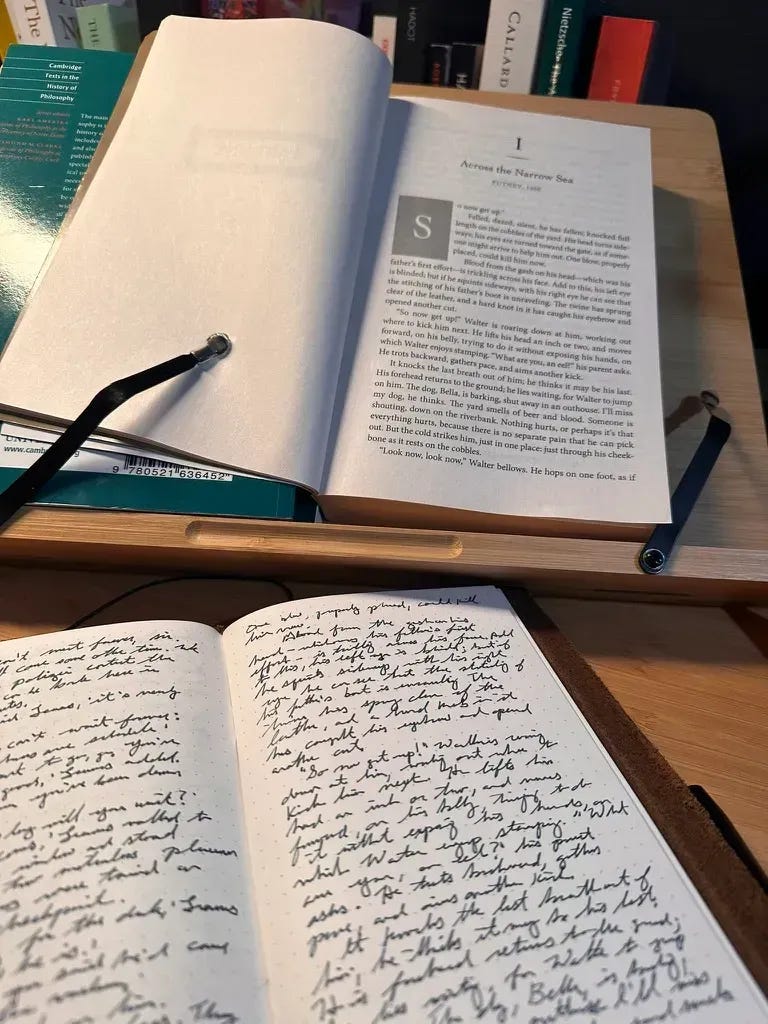
Because I am a modern writer, I often write on my computer. (For some reason, I only write fiction on my laptop—I have to get away from the big monitor on my desk. I don’t know why.) But I chose to do this exercise by hand, for a few reasons.
First, whenever I can’t find the words, I find that writing by hand does help me—so, I often go somewhere else for a bit with only a notebook. I find that when I write by hand, the ideas flow a bit more. There’s usually more crap that will need to be cleared, and the sentence order is never quite right, but the practice of writing by hand seems to be (somehow…I don’t have an explanation) more connected to my voice as a writer. This is why I take book notes by hand, too. So, it seemed fitting that I would write all of these by hand.
Second, writing by hand is slow. Speed is the enemy of attention and care.
Third, mistakes matter more when you write by hand. There’s no delete key. If I messed up a line, I would have to scratch it out. As a discipline, I decided that any paragraph that contained identifiable errors would need to be written again from the beginning. This meant I was much more careful as I copied these words.
Fourth, it was fun. I used to be opposed to ever appealing to the pleasure of an activity when recommending it, as I wanted to stress its intrinsic value, but when I wrote by hand…it didn’t feel like work. It was something I enjoyed doing, and that helped me keep doing it.
I’ve been doing this for a while, and I’ll keep doing it. I hesitate to say you should do it, too, but perhaps you’ll find it helpful. And if you have done it, let me know what you learned.
I hired Alexander Sorondo to do a developmental edit. If you’re a novelist, you should consider hiring him, too. His feedback so far has been tremendously helpful.
I found the Cennini book through a citation from D.S. Chambers as well.
Not technically the first line, if you count all the prefatory material. But it’s the first line of Chapter 1.
For instance, Ishmael’s narration of the officers of the ship eating their meal. How does he know any of this? Is he in the room? He doesn’t seem to be!
I got the idea of copying from Benjamin McEvoy on YT, and apparently many famous historical figures have done the same (counting Benjamin Franklin among them).
Can't wait to do it when I'm retired (that is, when I finally have the time).
I really enjoyed this post. Thanks for sharing it!
I've taught writing for more than 30 years now, and you're right that this approach doesn't show up much in contemporary writing instruction. I could only think of a couple of places where I've seen it expressly posed as an option, and this despite the strategy being a part of rhetorical education reaching back to ancient Greece. It is still present, but pretty broadly diffused: some of us still strongly encourage students to read drafts aloud, which helps to slow us down and pay attention to individual wording, sentence rhythm, length, etc., for example. But as curricular expectations grew, we were encouraged to make reading and writing itself something to be done outside of shared class time. Honestly, I think AI may signal a return for us to a classroom focus on hands-on reading and writing practice. We'll see.
For my part, I teach a course on style, and I draw on Queneau's Exercises in Style for inspiration. I ask students to take a short piece of writing, and revise it multiple times, incorporating all sorts of different constraints, examining what effects those changes have, etc. In the second half of the course, I encourage them to engage in the same kind of analysis (of others' writing) that you do above with Mantel and Melville. I want them to be able to identify and understand those writerly choices, to see how they aggregate into what we think of as a writer's style. It's a fun course for me to teach, and many of my students seem to appreciate the approach of looking at 1 page closely rather than 100 pages quickly. It's not quite what you're describing here, but it's related, I think.
Sorry about the wall of text--I'd originally just planned on saying that, based on my experience, there's never just one "right thing to do," and that your post matches up with a lot of what I believe about how we (should) learn about writing. Thanks again for sharing your practice in such detail! -cgb