
A Privacy Reading List
Books and articles on the value of privacy

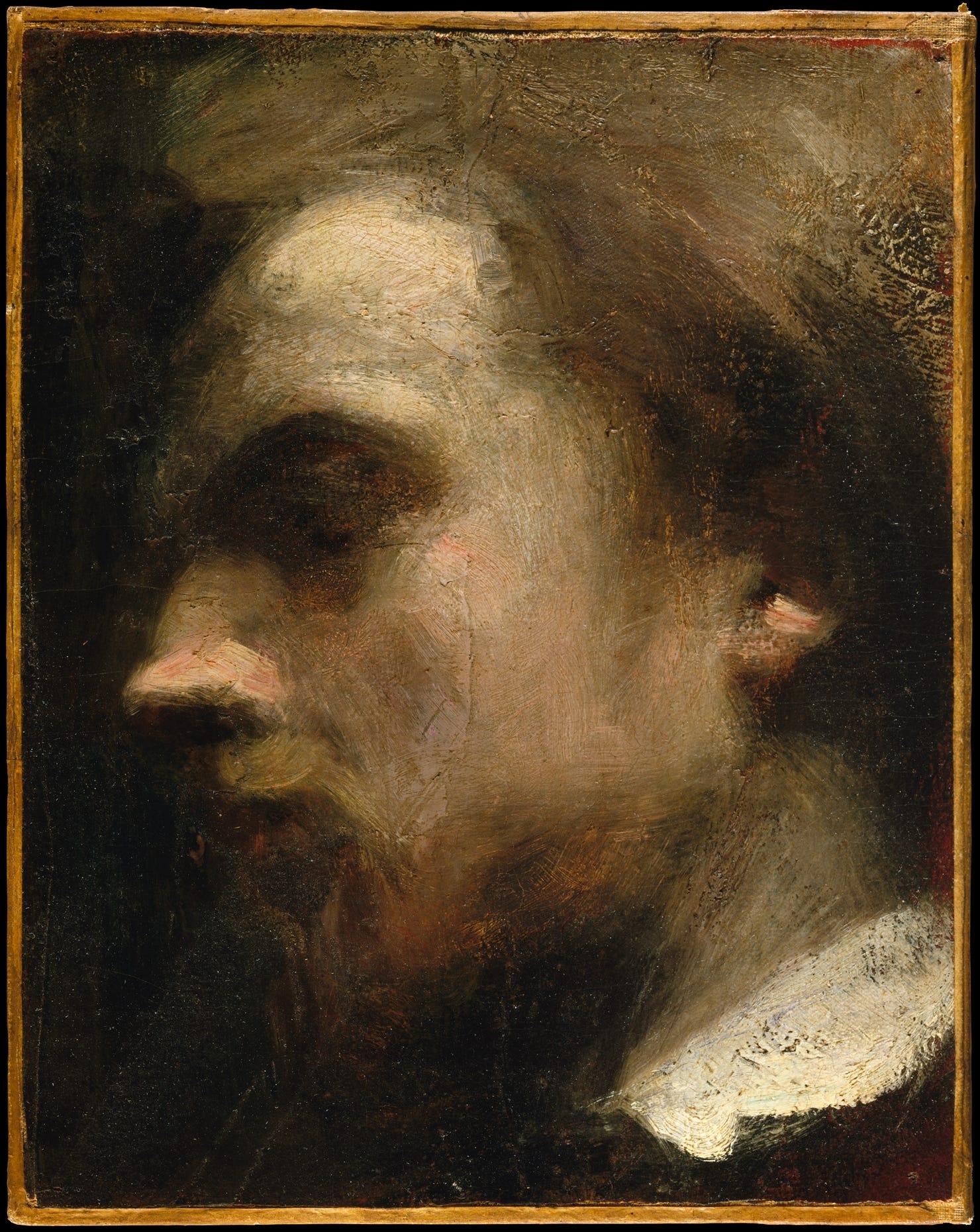
Privacy is a major theme of our 2026 book club. We’ve returned to this topic again and again in the first four months of our group investigation into the role of technology in our lives, and I’m sure we will continue to explore it throughout the year.
But we can only read so many books together. In case you want to continue reading on the subject, I am compiling a reading list. NB: I have not read all of these yet, so my descriptions in some places are a bit sparse. I’m sending this out early so others can continue investigating this topic alongside me. I’ll update the list as I read more. Like my list of the best philosophy lectures on YouTube, this is a living resource.
I welcome suggestions, as this will make the resource better for everyone.
Like the majority of my writing – including this year’s book club – I am not paywalling this. Time and research are required to build and maintain these resources, and so, if you are able, I’d ask you to subscribe to my newsletter.
Articles
‘The Right to Privacy’ by Warren and Brandeis
Originally published in the Harvard Law Review in 1890, Warren and Brandeis’ ‘The Right to Privacy’ is a foundational piece of American jurisprudence. While the American Constitution has no explicit right to privacy, Warren and Brandeis argue that there is an implied right to privacy in common law and in other legal protections; they also emphasize that the scope of rights has expanded over time. For instance, ‘liberty’ once meant only freedom from restraint, whereas we now have a more expansive definition.
(Note: when PDFs of articles are freely available online, I’m linking to them. I’m unable to do that for some of these articles.)
‘The Right to Privacy’ by Judith Jarvis Thomson
Thomson could be described as a skeptic about the right to privacy, in that she does not think that there is any such fundamental right. However, Thompson’s thesis is not anti-privacy, because she thinks that all of the protections we want from a right to privacy are guaranteed by other rights, e.g. the right to property.
‘Thomson on Privacy’ by Thomas Scanlon
Scanlon is directly responding to the above article by Thomson. Of the responses, this seems to be the most direct: Scanlon believes that the diverse violations still point to a single right.
‘Why Privacy is Important’ by James Rachels
Rachels is also directly responding to the above article by Thomson. Rachels defends the view that privacy is a distinctive right – and thus is important – because of its relation to intimacy.
‘Privacy, Intimacy, and Personhood’ by Jeffrey H. Reiman
And, in a final flourish, Reiman is responding to Thomson, Scanlon, and Rachels. As he puts it, Scanlon and Rachels are right that Thomson is wrong, but they’re right for the wrong reasons. (Example: Reiman believes that intimacy views, like Rachels’, wrongly import ‘market logic’ and treat intimacy as a ‘commodity.’)
Reiman believes that privacy involves the granting of a moral license to individuals, saying that they are in charge of the course of their lives.
‘Driving to the Panopticon’ by Jeffrey H. Reiman
Originally published in 1995, ‘Driving to the Panopticon’ is more timely than ever. Reiman’s focus is on the installation of camera systems on highways; we, of course, have things like Flock and Ring doorbell cameras.
It’s also an interesting case to consider, because traffic cameras are one of the cases where I’m most open to surveillance. Not large-scale data aggregation – I still have objections – but things like traffic enforcement seem like the right use of this technology, given that American roads are highly dangerous. (Though roadway fatalities are lower than before.)
‘Privacy, Autonomy, and Self-Concept’ by Joseph Kupfer
Kupfer’s thesis is that privacy is necessary for ‘the formation and preservation of an autonomous self,’ though he points out that ‘Strictly speaking, it does not reveal the value of actual privacy so much as belief in its existence.’ A person must believe that they have some privacy in order to develop into an autonomous individual.
‘The Right to Privacy and the Deep Self’ by Leonhard Menges
Menges calls his view privacy a ‘control view,’ where individuals have some right to control the flow of information about themselves. As Menges writes in the abstract:
The core idea is that the right to privacy is the right that others not make personal information about us flow unless this flow is an expression of and does not conflict with our deep self.
Nonfiction Books
Strangers and Intimates by Tiffany Jenkins
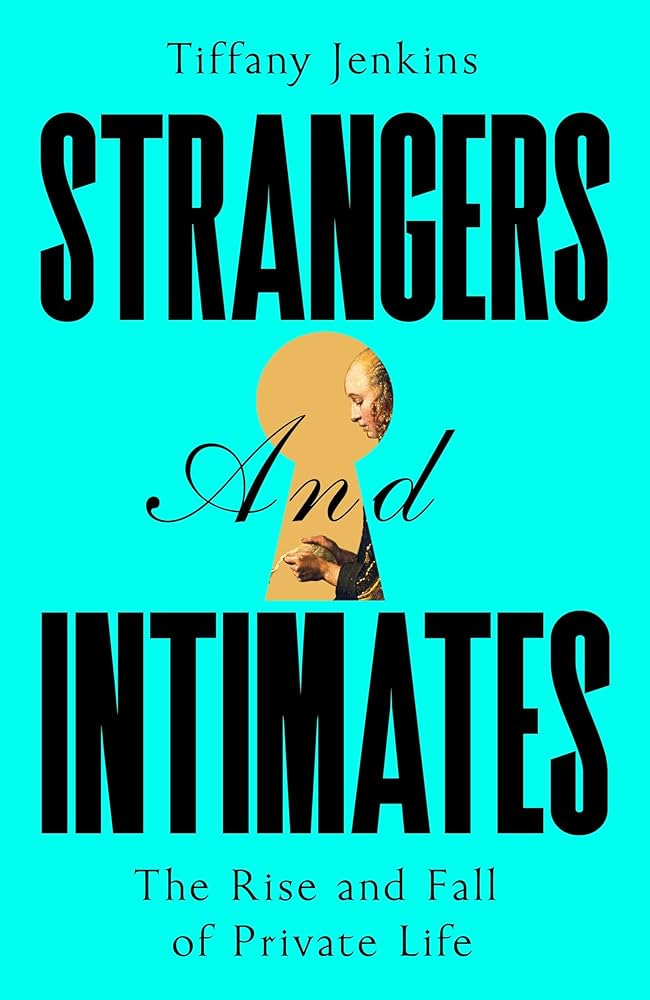
Jenkins’ is an historian, and Strangers and Intimates is a wide-reaching work of popular history: starting with the Ancient Greeks, going on to the Victorians, and ending with our digital age.
(Reading this today, so I’ll expand the summary soon.)
The Right to Oblivion by Lowry Pressly
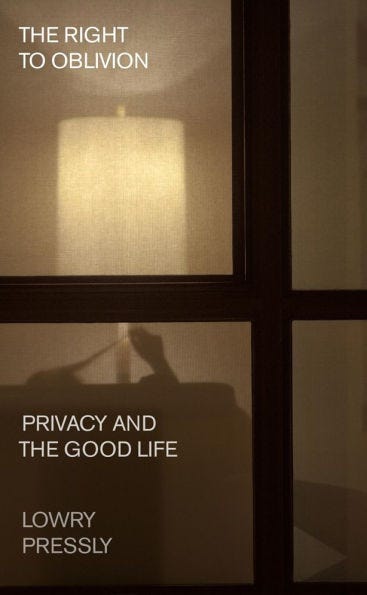
We’re reading this book for our book club, and so readers will have an idea of what it is about. In brief: Pressly beliefs that there is a particular kind of privacy, called oblivion, that has been ignored in most discussions of the topic. Oblivion is a realm of ambiguity and potentiality, where the subject matter is ill-defined (if defined at all). This is distinct from secrets, as in secrecy the subject matter is well-defined but concealed. Oblivion, he argues, is part of the good life.
Concealment and Exposure by Thomas Nagel
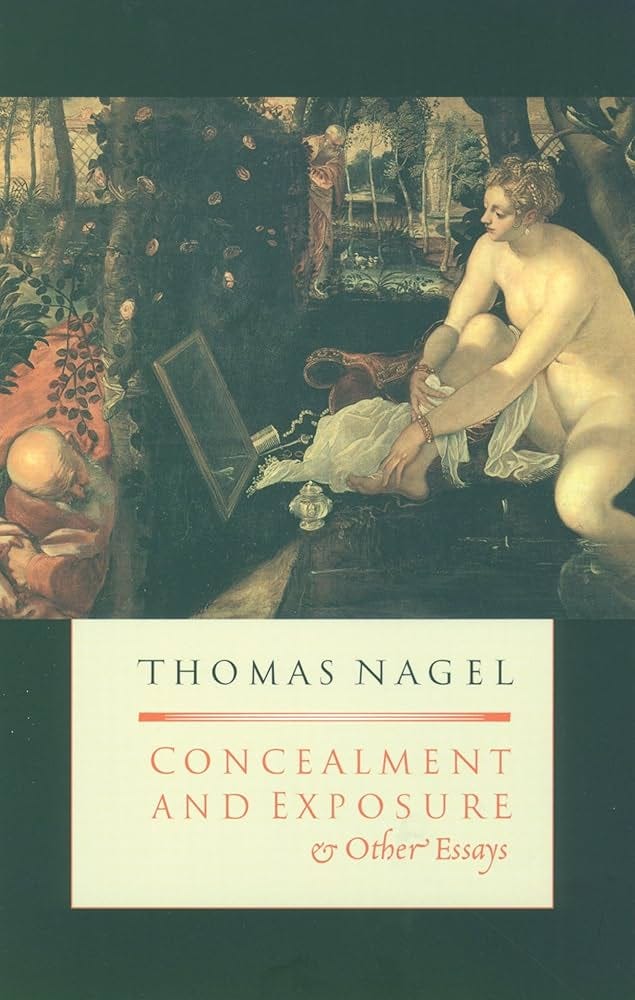
Thomas Nagel’s Concealment and Exposure contains several essays on privacy, not so much as a right but as a moral ideal. I find this approach to be spot-on. As we become more concerned about the ‘right to privacy,’ we get caught up in questions of the foundations of the right and its narrow, legally protected scope. But just like with free expression, which is both a legal right and also a social and/or moral norm, privacy is more expansive and complicated.
Nagel’s thesis, put roughly since I’ve only read the essays once, is that we need (1) a degree of concealment in our social lives for social and psychological harmony, and that (2) we can then be intimate with selected others by no longer concealing to such a degree.
But be warned: this is an essay collection, and only the first several essays are concerned with privacy. The best of the bunch can be found in Philosophy & Public Affairs. Nagel is also concerned with some of the privacy scandals of his particular time—thus, he spends a good amount of time on the public acceptance of homosexuality (prior to Obergefell) and the Clinton-Lewinski scandal.
The Age of Surveillance Capitalism by Shoshanna Zuboff
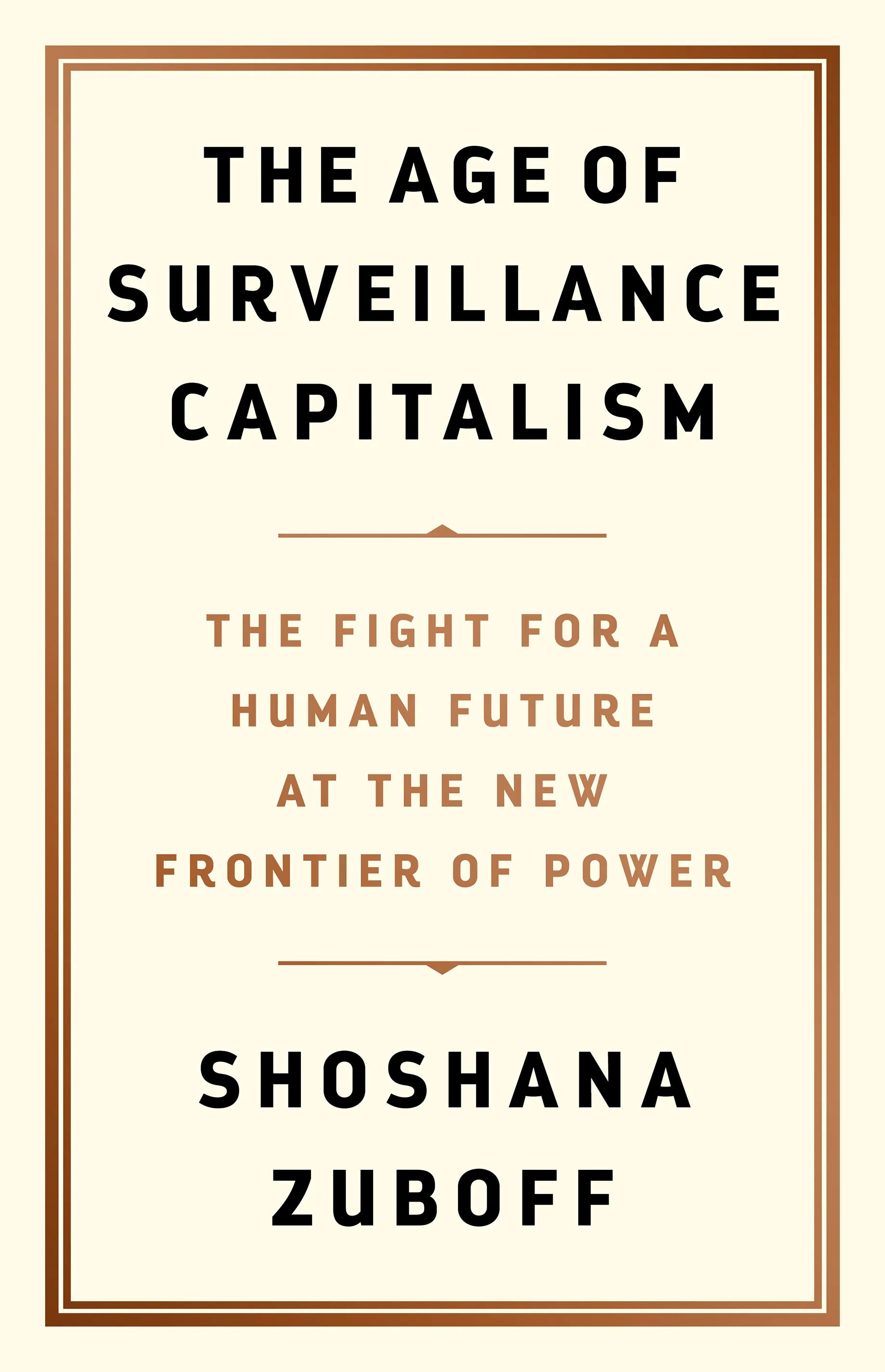
This is a tome which I have only scanned, so I can’t say much yet. It seems to be a standard reference in the discussion of privacy, especially in the United States, though it is largely concerned with surveillance (a related issue, but one that we need to keep distinct). I need to read it closely, because I’ve found that when large books get cited by everyone, there tends to be a drift in content and interpretation: everybody cites the source, but they’re relying on hearsay. With that in mind, I’m keeping any sort of summary to myself for now.
Discipline & Punish by Michel Foucault

Again, one of those books that everyone cites and that I suspect few people read (or at least read closely). This is primarily due to his discussion of Jeremy Bentham’s idea of the panopticon—originally a debtors prison and designed to extract maximum efficiency from all of the inmates.
The Presentation of Self in Everyday Life and Asylums: Essays on the Social Situation of Mental Patients and Other Inmates by Erving Goffman
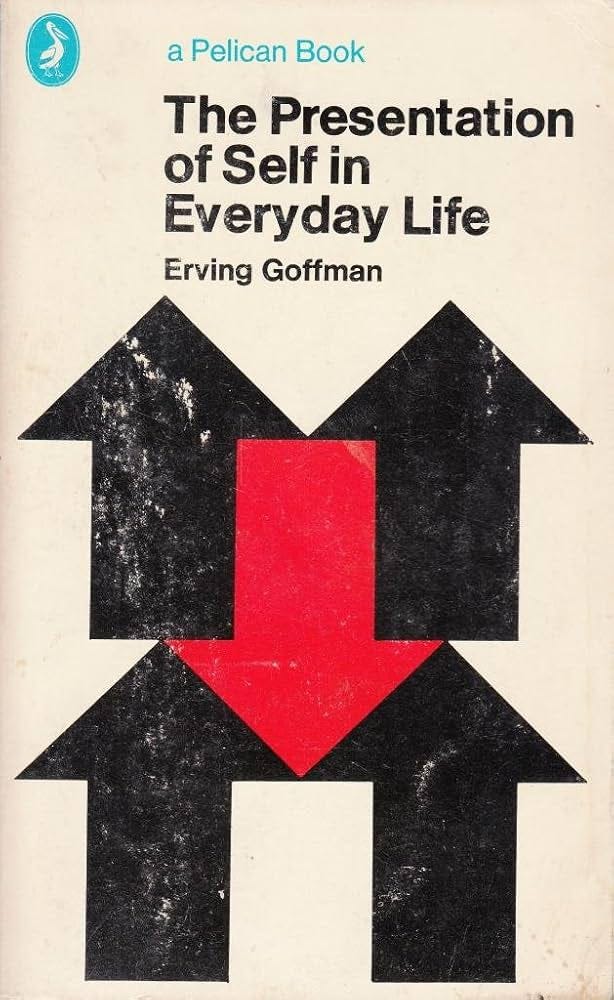
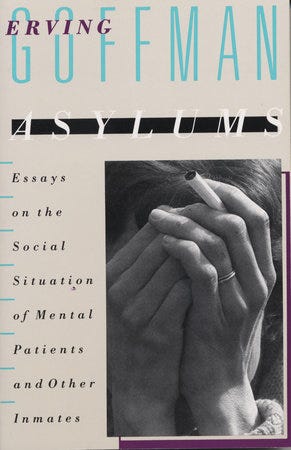
I currently believe – but I may be wrong – that Asylum is the work where Goffman introduces his idea of ‘total institutions.’1 This is mentioned in many of the essays on privacy that I’ve read, along with books like You and Your Profile by Moeller & D’Ambrosio. The Presentation of the Self in Everyday Life was also mentioned in Moeller & D’Ambrosio’s book when they discussed wearing social masks. This looks like it could have interesting parallels with Nagel’s essays in Concealment & Exposure.
The Transparency Society by Byung-Chul Han
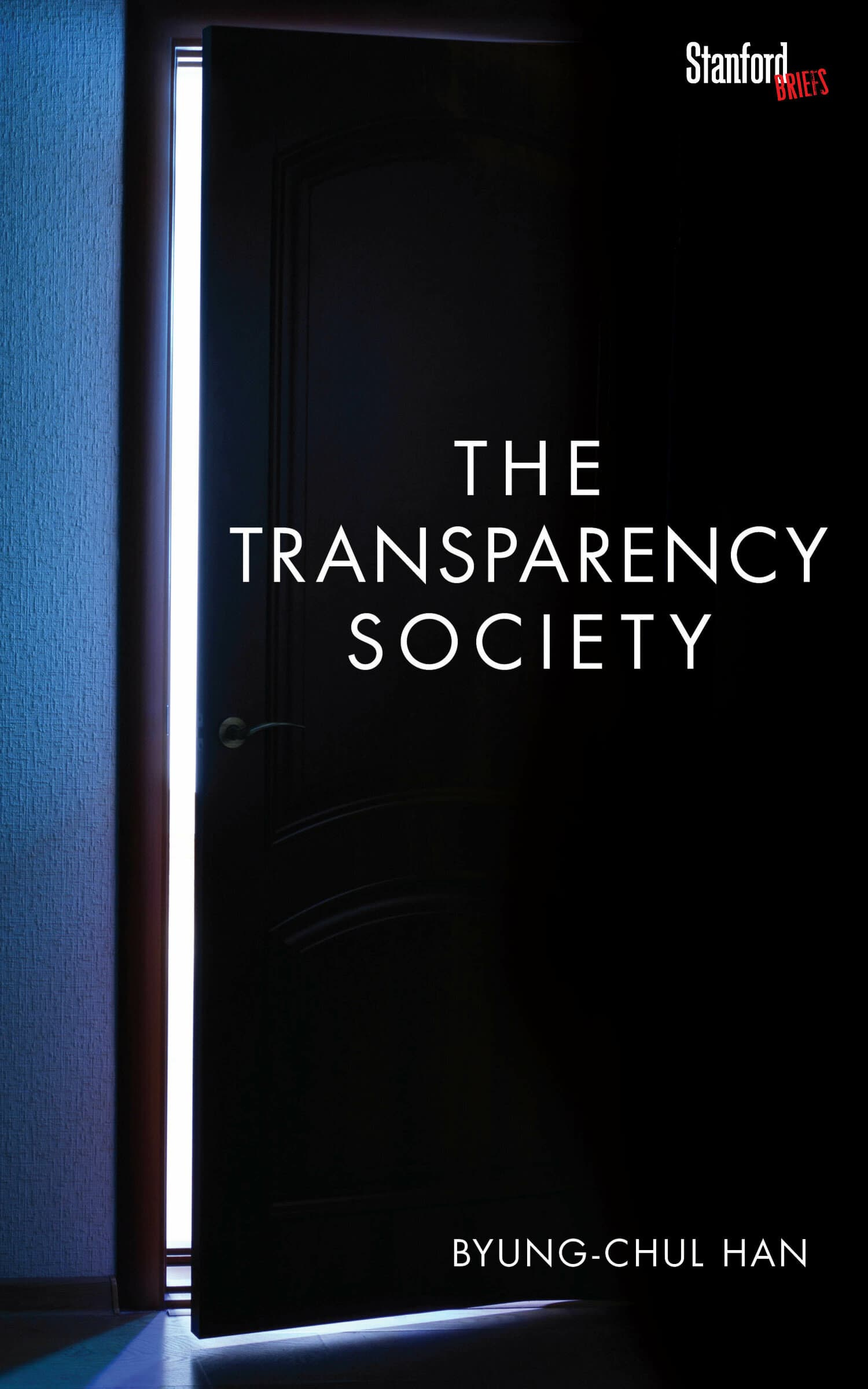
Byung-Chul Han is a favorite of many readers of Commonplace Philosophy, and so I couldn’t fail to include this title.
‘Transparency is a systemic compulsion gripping all social processes and subjecting them to a deep-reaching change,’ Han writes in the first chapter, and, ‘Transparency stabilizes and speeds the system by eliminating the Other and the Alien.’ This is an interesting idea – easily connected to Pressly’s work – because Han is writing of the Other and Alien in laudatory terms; there’s value in darkness.
Technically, it appears in an earlier journal article that is then reprinted in Asylums.
Thank you sincerely. I’ve been trying to complement our readings with related texts and didn’t really know where to start. This is super helpful
If you have/have not read some Supreme Court cases about privacy that are really cool. Here are a few cases that I found interesting from class:
1. Kyllo v. United States, 533 U.S. 27 (2001) - whether thermal imaging to look into the defendant's violated the homeowner's reasonable expectation of privacyy;
2. Florida v. Riley, 488 U.S. 445 (1989) - whether aerial surveillance of someone's backyard is a search under the Fourth Amendment.
3. Griswold v. Connecticut, 381 U.S. 479 (1965) - solidified privacy as a constitutional right. Court ruled that the conduct had to fall under privacy's "penumbra."