
Views of Things
Non-things by Byung-Chul Han, Part 3

Welcome back to our 2026 book club on the philosophy of technology. Throughout the year, we’re exploring questions like:
What effect has the rise of digital technologies had on the human condition?
What do we lose – and what do we gain – when we live our lives online?
What do conventional narratives about technology (techno-optimism, techno-pessimism, fatalism) miss? What facts do we need to consider? What alternative narrative about technology do we need to construct?
Here’s the rest of the January schedule.
January 25: Members-Only Zoom Call, 3 PM Eastern
January 26: The following parts of Non-Things: Stillness, Excursus on the Jukebox
Note that the call is on Sunday, January 25 at 3 PM Eastern. This will be when we have our monthly calls: the final Sunday of the month at that time. Those calls are open to paid subscribers; a recording will be made available to those unable to attend. These calls will include a 30-45 minute presentation on the material and a group discussion.
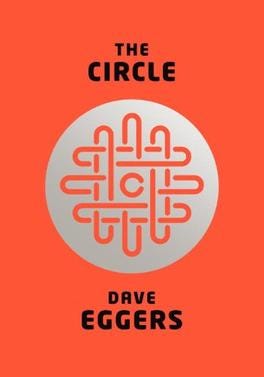
Since we are close to the end of January, I want to announce the February reading schedule now as well. Our main text is the novel The Circle by Dave Eggers. It’s a long novel (about 500 pages), but I remember from reading it that it is breezier than, say, Remains of the Day (which we read last year). Our optional text is ‘The Narcissistic Personality of Our Time’ by Christopher Lasch. That is a chapter from Lasch’s The Culture of Narcissism. This chapter is marked is optional because you might not want to buy a full book for a single chapter; however, the text is readily available online, so you can likely find it for free.
Eggers’ novel is a dystopian novel, following a young woman as she rises through the ranks of a California tech company. It contends with themes of privacy, surveillance, and the allure of progress.
One more note about The Circle: Eggers’ divides the novel into Books I-III. However, Book I is nearly 300 pages, and Book III is something like 3 pages. So we have to use another division for our reading schedule
February 2: The Circle, up to page 118 (ending at the section that begins ‘In the days that followed, Me knew it could be true…’)
February 9: The Circle, up to page 234 (ending at the section that begins ‘It was all easy enough to assimilate…’)
February 16: The Circle, up to page 338 (ending at the section that begins ‘On a granite panel outside the Protagorean Pavilion the building’s namesake was quoted loosely…’)
Optional: ‘The Narcissistic Personality of Our Time’
February 21: Members-Only Zoom Call, 3 PM Eastern
February 23: The Circle, to the end of the book.
This is a substantial amount of reading. However, Egger’s novel is not too demanding a read, and this pace allows us to finish it in a month. You may want to get a head start if you’re worried about the pace — hence the early announcement of the schedule.
Now, on to Han.
I see my role in these read-alongs to serve as the most charitable reader of the source text. But I admit that this chapter tested me in ways that I hope become clear as I write.
Maybe the Internet of Things is a response to our deep-seated fear that things could be up to no good in our absence. The infosphere puts things in chains. The Internet of Things is their prison. It tames things and turns them into servants catering to our needs.
This passage follows several pages of musing on how things feel unruly; using a Mickey Mouse cartoon as an example, Han calls this the villainy of things. The idea that Han is exploring in this chapter – at least at the beginning – is that things present a danger to us; they resist; they can be ‘unruly actors.’ He wants to diagnose our desire to integrate these things into the infosphere as part of a response to this villainy.
Han describes our relationship with things as becoming cold — though even that may not be quite right, as ‘things are not even cooled down. They have neither cold nor warmth; they are worn out. All their vitality is waning.’
This contrasts with, for example, Rilke’s description of things, which Han quotes:
I want to sleep one time beside each thing, grow drowsy from its warth, on its breathing dream up and down, sense in all my limbs its dear relaxed naked being-near and become strong through the scent of its sleep and then in the morning, early, before it wakes, ahead of all farewells, pass on, pass on.1
Han does speak to me when he writes that ‘Beautiful crafted things warm the heart,’ and that ‘Mechanical coldness does away with the warmth of things.’ However, I think he is misdescribing what is going on here.
Here is what I think Han is saying, put into my own words. The move from the world of things to the infosphere has changed our relationship to things themselves, perhaps even to the world as a whole. Things are now not a source of comfort but rather a source of opposition. We ‘tame’ things by integrating them into the infosphere.
But even here, I’m not sure if I’m right, because Han also seems to write of things not resisting us they used to.
Speaking to my own experience, the digitalization of things has made them more resistant to me, not less. When my wife and I moved our son into his own room, we were told by multiple people that we needed to get a baby monitor; this would allow us to check on him while he slept. We had one, basically an always-on walkie-talkie. Then our son developed sleep problems, and we worked with a sleep consultant. (An aside: do not pay a sleep consultant for advice they got from a $20 book.) She insisted that we buy a camera, and she made a recommendation: a Wi-Fi-enabled camera that would ping our phones. This thing was expensive, and it never worked. I fought it constantly. False positives. Sudden outages. It was a ridiculous product — I threw it in the garbage.
Another example: when we moved into a condo in Austin, we had a smart fridge. The thing broke constantly. Because of its design, it was not repairable unless you had access to proprietary parts. I was unable to perform basic maintenance, and we went without a refrigerator for weeks waiting for repairs. (It took four visits from a tech to get the parts, mostly due to bureaucratic warranty policies.)
Every time I have invited a ‘smart’ object into my home, it has been an endless headache. In moments of anger, I speak about them like they are evil agents: This thing refuses to work. It’s out to get me. It hates me, and I hate it.
I don’t feel this way about a bike with a flat tire, a mechanical watch that won’t wind, or a pencil with a tip that keeps breaking. The presence of a digital sphere of interaction has not reduced friction; it has made my life considerably worse. Han writes of Alexa as solving all our problems; I completely disagree. Alexa has only ever caused problems for me.
Han and I likely have sentiments that point in the same direction — we both think that the ‘smartification’ of everything is a problem, a regress that has convinced everyone that it is progress. We seem to have very different assessments of what is going wrong, however.
In The Magic of Things, Han writes:
When one pays more attention to things, one forgets onself, loses oneself. When the ego gets weak, it is able to hear that mute thing language. The experience of presence requires exposure, vulnerability.
There have been moments when I have had similar thoughts. Yet here, I think Han is underspecifying a key term: attention. There are many modes of attention. The smartphone demands our attention, and when using it one forgets and loses oneself. Yet, I doubt this is the sort of experience Han has in mind. He is conjuring a very romantic image, perhaps of a man with his tools, but we need an account of why attention to the smartphone and the act of losing oneself in information is problematic, while losing oneself to things, like tools, is not. This, I fear, is a critical weakness in this chapter; I’m starting to think that it is a critical weakness throughout Non-things. I’ve said many times that Han is pointing to something, but what exactly is he pointing to? Philosophy, after all, must go beyond mere lament. More than in his other works, I feel Han is simply lamenting an underdefined sense of loss.
Han’s brief discussion of Kafka on letters motivated this break with him. Is a letter a non-thing? It is certainly not mere information in the way that an email is, I would think. But Kafka struggled with writing letters due to, apparently, their artificiality. At some point, do we conclude that all language is similarly artificial? Or that everything human beings do is artificial? Where does the critique end? Or, better, where does the actual critique begin?
Let me remind myself of what I wrote about Han at the beginning of this process:
The difficulty in reading Byung-Chul Han should be apparent after this week’s reading. In the selection we read (totaling no more than 30 pages), Han manages to discuss Heidegger, Hegel, Arendt, Juvenal, and the Japanese novelist Yōko Ogawa, with other thinkers mentioned in the footnotes. This typical of his writing — he moves very quickly, often only spending a paragraph or two on a given thinker. Han also tends to reason by association, finding concepts that feel similar and seeing where the thoughts go. This can mean that readers will struggle to follow the argument. (I sometimes suspect that there is no argument.)
This raises another question: how do we read him in a productive way? When reading Han, I try to find those thoughts which provoke more thoughts, suggestions or allusions that I can try to expand on. I also to try expand on his arguments or insights, seeing if I can take those raw materials and fashion them into an argument. This approach means that many of us will have very different assessments of the book, and the discussion could naturally go in many different directions.
Reading this passage – which I wrote only a few weeks ago – makes it a bit clearer to me why I found this chapter so frustrating. I read Han because I can find some ideas that seem right, and then I need to go and think them through more for myself. In this chapter, I found it difficult to find any ideas like that. I felt myself getting lost in the swirl of associations and references; I was caught in a storm and saw no way out!
But then, near the end of the chapter, I found this:
The ‘reliability’ of things consists in the fact that they embed human beings in those relations to the world that make life stable. With its ‘reliability,’ the thing is a world-thing. Its reliability is part of the terrestrial order. Today, the thing is decoupled from this world-founding wealth of relations and exhausts itself in pure functionality.
Here, I almost had a thought I could see as a way to build upon. The first few sentences here are essentially restatements of ideas from the beginning of the book. But the final sentence, especially the phrase ‘exhausts itself in pure functionality’, still baffles me. As I wrote about smart objects – which are still things – pure functionality does not seem to be an apt description.
I’m hopeful that the comments this week will be productive. I admittedly struggled to make sense of this. The post on Heidegger’s ‘Question Concerning Technology’ is still coming — I didn’t make as much progress on the ideas as I would have liked. Heidegger is dense, but I never think there are no ideas there.
I’ll highlight some of my favorite comments from last week below.
First, from Ella:
“First, the smartphone is designed to be frictionless. This is even revealed in how it is built. It lacks embellishment and ‘is dominated by the smooth and straight…It is dominated by a straight-forwardness that finds its best expression in affects.’ This goes beyond its physical design. The way apps are designed is to give you exactly what you want with the minimum amount of effort — unless, I should add, that effort (or the convenience of avoiding that effort) can be monetized.”
Erik Hoel recently wrote an essay called “Our Overfitted Century” that explores what I think is a broader cultural drive towards the most frictionless, lowest-common-denominator aspects of any particular forms of life. I wonder if this counts as a diluted form of dystopia.
Han’s contrast of Touch and Sight while exploring the de-reifying nature of smartphone use brings to mind the place of other senses in this configuration. Was Sound, in the form of Alexa or Siri, the next step? Will there come a time when Taste is subsumed by digital life?
“The boundaries between the infosphere and the world of things is porous. It is transient. We can breathe life into data by transforming it into things, and we can rob life from things by transforming it into data. To print a digital picture is to make data sacred. But it becomes sacred when it ceases to be data and enters the world of things. What we lack in the infosphere is permanence and stability. By crafting things, we find this.”
Friction and scarcity seem to create the dividing line here. Without them things get lost among themselves. This is not exactly insightful but I think I can better understand many writers’ impulse to equate utopia and dystopia.
I go back and forth about friction. On the one hand, I agree with the initial sentiment. We do seem to be hellbent on removing friction wherever possible. In the bad days where I worked in tech, removing ‘friction’ was one of the highest goods, second only to increasing revenue (and removing friction was seen as a great way to increase revenue). Yet, this week I kept coming back to the fact that the digital world has introduced a lot of friction, too.
A silly example, but one that always comes to mind: scanning a QR code to see a menu at a restaurant. I’m sure this makes someone’s life easier, because they don’t have to print menus all the time. Yet, this is a deeply unpleasant experience. I’m always dealing with some new interface, or zooming in to read the text, or finding out that even the digital menu is already outdated.
David F. on some frustrations with Han’s view of photography:
I really thought Han’s take on photography was poorly thought out. He seems to confuse the process of photography with the photograph, and he leaves out the intention of the photographer.
A photographic print on a wall represents a photographer’s view of something. Whether the photographer produced this by digital or analog means is often indistinguishable. It is interesting that Han falls into his own labeling trap - putting meaning onto the thing by virtue of information (non-thing), the information being how the photograph was produced.
He also claims that an analog photograph represents the real world (bottom of page 31). It does not, and never has. It is a two dimensional, static representation of the world from a single point of view. It has been manipulated by the photographer throughout the process: focus, depth of field, shutter speed, contrast, cropping, burning/dodging, mounting, displaying, etc.
I do understand what he was trying to get at, but I think this was the example that emphasized to me how little of his work seems to stand up to detailed scrutiny.
I have now regulated him to kind of a social-critic poet role, putting ideas out there that cause me to have certain thoughts and feelings, as opposed to ideas that are backed by evidence and argument. He just makes too many statements where I would expect some evidence, and he provides none. Probably the most absurd one, from his most popular book “The Burnout Society” published in 2015 “Despite widespread fear of an influenza epidemic, we are not living in a viral age”.
I have enjoyed his books (Burnout Society, Vita Contemplativa, Non-things), and especially his idea on the importance of “festivals”, but in retrospect they leave me unsatisfied.
At the risk of giving too much away about my forthcoming book, I’ll say a few things. My book is broadly about contemplation and leisure in what I call the ‘age of distraction.’ This has obviously overlaps with much of Han’s work. In fact, I cite Vita Contemplativa quite a bit in one chapter. But I find that you really must do a lot of work to get to the conclusions – or something similar to the conclusions – that Han asserts.
As for his claims about photography: I largely agree, David. Several other commenters followed up specifically about photography; I encourage others to go back to that post and read the exchange. Adam, for instance, wrote: ‘I’m married to a portrait painter, so allow me to observe that portraits are much more alterable that photographs. Yet I doubt Han would consider a painting to be a non-thing.’
David L., from the post on artificial intelligence:
The thought struck me today. Heidegger, Han, Kingsnorth, et al are generally pretty negative about technology because they view it as something that divests us of who we are. As you pointed out, in this chapter, one of Han's worries is that the confrontation with AI leads to an adaptation of what thinking is in light of the new technology. What it means to be human changes in reaponse to our encpunter with the technological other. The technological world unmakes our own and leads us on to a death of our own making. In our attempt to master the world, over time we annihilate ourselves and so become mastered by it. As this process continues, humanity becomes unrecognizable. And that begets mourning. I've always thought they were right about all of that. But my shifting understanding that alienation is the root of all possibility is making me think this alone may not be the final word. What if all of this is correct, but there is more to the story? What if technology does alienate us? What if it does eliminate the current world? And yet, what if that is not an utter loss but the source of its emancipatory power? Technology constantly invokes crises within us as individuals and within our societies and cultures. It threatens us. But that threat opens up a wound within us that becomes the seed of possibility for a new future. The wound, as wound may fester. It may kill us. That is a real fear. But it may also bring us together and allow us to meet one another and the world in new ways, to reach into one another through the breach. New ways of thinking and being can become possible through the encounter with the mechanistic other. If this is the case, technology brings with it the possibility of failure, the risk of annihilation, but it can be a true and absolute good creative effort which may heal us through our wounds. None of this eliminates the critiques or worries of Han et al. But it may provide a way to embrace them and learn to recognize and act against the nihilistic risk of the technological while cultivating its wonder and possibility in the world.
I don’t have much to add about this comment, but I want to highlight that last sentence: ‘None of this eliminates the critiques or worries of Han et al. But it may provide a way to embrace them and learn to recognize and act against the nihilistic risk of the technological while cultivating its wonder and possibility in the world.’ Well said.
And Skyler:
“The main danger that arises from machine intelligence is that human thinking will adapt to it and itself become mechanical.”
I don’t foresee human thinking becoming mechanical in the sense that the ‘way’ they are thinking will be mechanical (thinking mechanically or statistical prediction), but rather human thinking will become a mechanical process. 1. Have a question, 2. Reach for your phone, 3. Google.
The “intelligence” sought is found, but rarely understood (or lingered with). Answering a question apart from mechanical help often “brightens and clears the world” because it requires understanding through human interaction or the interaction with real ‘things’.
From Diaries of a Young Poet
This week I found my opinions diametrically opposed to almost whatever Han said. “Who, today, feels looked at or spoken to by things?” he asks. But I have the strangest feeling the my neighbor’s doorbell is watching me… and it literally is. “Stories… in which things are the protagonists, telling the stories of their own lives, would be unthinkable today,” Han insists, but I recall Toy Story doing quite well. He said people do not lose themselves in things like they used to. Tell that to the lady blocking the subway steps because her phone pinged her when she came above ground and she stopped right there to respond, oblivious to a river of commuters trying to push past.
We’re near the end of the book, so it’s time to say it: COMPUTERS ARE THINGS. Han says, “The handless humans of the future are also footless. They hover above the earth in the digital Cloud.” That’s just ignorance. I used to have a sticker on my laptop that said, “There is no cloud, it’s just somebody else’s computer.” Maybe tech companies would like us to think our data is blowing through the skies above our heads like suspended molecules of water vapor, but it isn’t true. Computers are material objects. Data is imprinted and stored on physical objects -- hard drives, random access memory, tape storage. Digital data simply does not exist without these objects, these things. There is no infosphere. There is only the material sphere.
Tech companies like to obscure how their things function. When they talk about making the user experience “frictionless,” they mean their users must never need to troubleshoot a problem by themselves, because this would give them an opportunity to learn how the thing works. If the user learns how the thing works, they don’t need the tech company anymore, because at this point there is an alternative to everything the tech company sells which the user can get and use for free if they can figure out how to install and configure it. If you believe the computer is a non-thing, you are at its mercy. If you know the computer is a thing, you can manipulate it like a thing. You don’t need to let it manipulate you.
That brings me to quotation from Han that I disagree with most vehemently: “Digitalization has deprived things of any ‘defiant’ materiality, any intractability.” Everyone has had the sensation that a piece of technology is working against them. (Jared gave several great examples, his baby monitor and fridge). When Han talks about how physical things exist in opposition to us, I believe he means that our desire for how reality should be can run up against the inconvenient and undeniable fact of the existence of a thing. The form of a thing determines its function; it can’t be other than what it is. But digital technology is doubly stubborn, because it can be programmed. It has a will -- not a will of its own, but the will of its programmer. Using a piece of digital technology is handwork, only there are two hands trying to use the thing at once, our hand and the hand of the programmer. Although perhaps I ought to say, the programmer’s employer.
Unusually, Jared, I really disagree with you regarding this chapter—it is my favourite (of Non-Things) that I have read to date.
I think you've missed something by suggesting that the resistance found in "smart" items is akin to the resistance of non-smart items. The resistance you have described in relation to the former is unintentional and, relatedly and more importantly, generally unable to be overcome by the consumer. When baby camera wouldn't work, you didn't have a meaningful role to play (indeed, nobody did—the item had to be thrown away); it's not the same as, say, tools inviting you to participate in the world by virtue of their reliability and function in combination with your own efforts.
My reference to tools above is itself, though, a kind of boring and uncharitable example in the context of Han's writing. My favourite portion of this chapter was the two paragraphs on page 52, beginning "These days, things are not even cooled..." and ending "The other, deprived of its otherness, is reduced to an available, consumable object." The reason I say tools are a boring example is because, in my view, the most interesting thinking by Han here was his reference to the non-physical opposition that objects can present, i.e. they can (or previously could, by way of their longevity and craft) demand creativity and appreciation.
Romance may be getting the better of me here, but I do believe there's some value in items possessing a kind of contemplative romance—and thought Han articulated that well. Another example that came to mind was the difference between Tiktok videos/AI-generated media and theatre (or, somewhere closer to the centre of the continuum, well-written and -directed films); theatre undeniably presents an opposition lacking in Instagram reels, and it achieves that through—to echo Han—realisation, reification and embodiment.